 Sherman & Plano, TX Criminal Defense Lawyer Blog


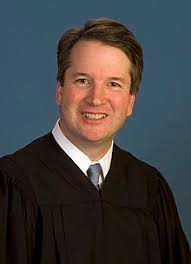 The last-minute presentation of sexual assault evidence against Judge Brett Kavanaugh has put his Supreme Court nomination limbo. Judge Kavanaugh was not my first choice, of those on the Trump list, but I see problems on both sides of the accusation. Sexual assault cases can be the most difficult to defend and prosecute, as they often rely on judging he-said/she-said opposite testimony with no forensic evidence.
In child cases, this is very difficult for the defendant, because jurors tend to want to believe the child. Thus, they want to force a defendant to prove that he didn’t do it, rather than following the presumption of innocence and true proof beyond a reasonable doubt burden that they would use in any other assaultive case. In adult cases, the burden is often on the accuser, where it belongs, to prove beyond a reasonable doubt that his or her statements are truthful. But, there can be extra emotional burden based on people’s experiences.
In this case, Professor Ford accuses Judge Kavanaugh of forcing her on a bed, attempting to unclothe her, and putting his hand over her mouth to conceal her screams. Under Texas law and most state laws, this is attempted sexual assault. Sexual assault and its lesser included offenses are not normally Federal crimes unless committed on Federal land such as a national park or Native American Reservation. Additionally, the Senate hearings in which Professor Ford is supposed to testify will not be bound by the Federal Rules of Evidence as a criminal trial would be.
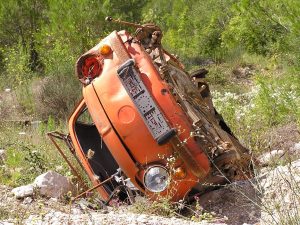
 Six years ago, Texas Governor Rick Perry vetoed a ban on texting while driving as an affront to personal liberty. This year, a Republican legislature and Republican governor said that personal liberty needs to be curtailed in the sake of their view of public safety. As of September 1, 2017, texting and in the act driving in Texas is a traffic-ticket level, Class C offense. Although the legislature created several exceptions that will be noted below, an officer who suspects that you are texting and driving, no matter what you are doing, will have a reasonable suspicion that you are violating the law and be able to pull you over for further investigation.
 This begs the question, how could encouragement alone ever be the but for of another person actually killing himself? A jury would have to find that but for Ms. Carter’s conduct, the deceased would not have killed himself. Then, the state would have to show also that the concurrent cause (method of death, other factors pushing suicide) were not sufficient on their own to cause death. That would be a very large uphill battle for the prosecutor, because a person who kills themselves by definition caused their own death by some act.
 Emotions ran high last week as Michelle Carter was sentenced to prison under Massachusetts’ manslaughter law for encouraging her boyfriend to kill himself, which he did. Under the apparent facts of the case, she overcame with words her boyfriend’s reluctance to kill himself due to her crazed need for attention. What would happen if something similar happened in Texas?
 This section went all the way to the United States Supreme Court in Deal v. United States 113 S.Ct. 1993 (1993), in which Mr. Deal got a bad deal at court of 105 years in prison for possessing a firearm during five bank robberies. The Court explored whether “second or subsequent offense” meant that he would have to be convicted by judgment of the first bank robbery on a date before the second or subsequent convictions. The highest Court found that these offenses could be stacked, even if all convictions happened on one judgment and from one trial. The 105 year sentence was affirmed.
 These policies have changed the dynamics of DWI defense in Grayson and Collin County. When I started practicing, around half of DWI trials did not involve a chemical test, but now almost all of them do. Back then we would mainly argue over the performance and validity of the field sobriety testing, which we still do, and the way a person looks on video. But, the addition of chemical test evidence means that you now more than ever need a highly trained DWI lawyer like myself who has been thoroughly trained on all aspects of DWI defense. There are more technical issues in a driving while intoxicated prosecution than most other cases, including most homicides.